Nuclear-Armed Iran Could Escalate Regional Conflict

On March 3, 2026, a magnitude 4.3 earthquake struck Iran in the Khonj area of Fars Province, with its epicenter at a depth of 10 kilometers. According to the US Geological Survey (USGS), the quake struck 52 kilometers northwest of the city of Gerash. Its impact was felt in rural areas. No major damage was reported.
Some reports claimed that the earthquake was caused by Iran’s secret nuclear test, but experts dismissed this. Sunday Guardian Live reported that there is no scientific evidence linking the earthquake to any nuclear or military activity. Similar claims have been made before, such as the 2024 magnitude 4.5 earthquake in Iran that was attributed to a nuclear test, but CTBTO (Comprehensive Nuclear-Test-Ban Treaty Organization) data confirmed it was natural. Iran is located in an earthquake-prone area, so such earthquakes are common.
At what depth does a nuclear test produce an earthquake of what magnitude?
Nuclear tests can cause earthquakes, but their waves and characteristics differ from natural earthquakes. The intensity of a nuclear explosion depends on its power, for example, a 5-megaton test can produce a magnitude 6.9 earthquake, but it also depends on the depth of the test.
To conceal the test, it is conducted at a sufficient depth, such as a Scaled Depth of Burial (SDBO) greater than 100 meters per kiloton, to prevent the release of radioactive material. A typical nuclear test has a magnitude of 5 to 6 or higher on the Richter scale, while smaller tests produce less intensity. Iran’s recent earthquake was only 4.3, which is low even for a small test. According to the CTBTO, nuclear test waves are explosive, while natural earthquakes are tectonic.
According to the Berkeley Seismology Lab, North Korea’s 2016 test produced a magnitude 5.1 earthquake, equivalent to 7,000 tons of TNT. Testing at a shallower depth increases the intensity, but increases the risk of radiation leaks.
Iran claims to have built 10 nuclear bombs in 24 hours? Is this true?
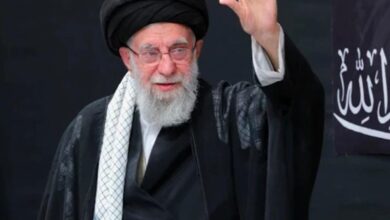
Iran did not make any direct claims a few days ago, but US Special Envoy Steve Witkoff told Fox News that Iran said it possessed 460 kilograms of 60% enriched uranium, enough to produce 11 nuclear bombs. Mohammad-Javad Larijani, a close confidant of Iran’s Supreme Leader, said that if needed, Iran could develop a military nuclear capability within 24 hours. A BBC report stated that Iran is close to developing a nuclear weapon, but is not yet ready.
According to experts, if Iran decides to, it could build its first bomb within weeks because it has sufficient enriched uranium. According to the New York Times, Iran can produce 10 nuclear warheads in six months. Iran has long maintained that its nuclear program is peaceful, but the US and Israel claim it is an attempt to develop weapons.
Did China, Russia, or North Korea provide Iran with nuclear technology or weapons?
A report by the Carnegie Endowment for International Peace stated that if Russia and China provided critical nuclear technology to Iran and North Korea, it would pose a significant threat to the United States, but Russia has not yet done so.
The CSIS report stated that in 2025, Russia helped Iran develop nuclear power by providing low-enriched uranium and research facilities for scientists. North Korea has provided Iran with ballistic missile technology, such as the Shahab-3, which is similar to North Korea’s Hwasong-14, but there is no evidence of nuclear weapons technology. A US Congressional report stated that China has provided Iran with missiles and dual-use equipment, but not direct weapons. The Axis of Aggressors (Axis of Aggressors) comprising China, Russia, Iran, and North Korea is developing nuclear capabilities, but there is no direct weapons transfer.
Russia has provided Iran with S-300 air defense systems. Overall, technology is being shared, but there is no concrete evidence of nuclear bombs.
What would be the outcome of war if Iran possessed nuclear weapons?
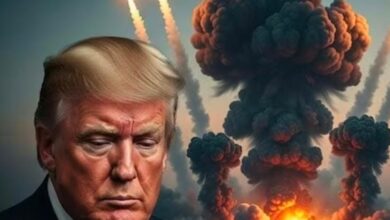
If Iran had nuclear weapons, a war between the US, Israel, and Iran would be even more dangerous. A Brookings Institute report states that Iran’s regime is difficult to change. A nuclear weapon could trigger a nuclear race in the region.
The CFR report states that Trump stated that he would never allow Iran to acquire nuclear weapons. The goal of the war is regime change, but if Iran had weapons, it would have caused a major crisis in the Middle East.
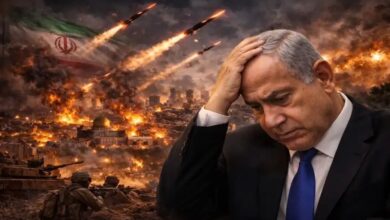
Al Jazeera’s report states that Israel’s goal is regime change, but Iran’s weapons could prolong the war. Closing the Strait of Hormuz would increase oil prices. Overall, Iran’s weapons could escalate a regional war into a nuclear war, making a US-Israel victory difficult.