Jagannathpur Mela: Where History, Faith, and the Cultural Soul of Jharkhand Walk Together
The Living Epic of Nagvanshi Heritage, Adivasi-Moolvasi Culture, and Folk Life
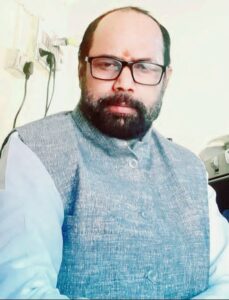
Vijay Shankar Nayak Ranchi: The true introduction to any society’s civilization does not come from its palaces, monuments, or economic achievements, but from those cultural traditions that remain alive in the collective memory of its people for centuries. Jharkhand’s cultural identity has not been shaped merely by its forests, mineral wealth, and natural beauty; rather, its folk festivals, fairs, akharas, folk songs, and community life-philosophy have given it a distinct character. Among these priceless cultural heritages, Ranchi’s Jagannathpur Mela is one such festival that presents a wonderful confluence of history, faith, social harmony, and cultural continuity.
When, on the second day of the Shukla Paksha of Ashadh month, Lord Jagannath, Balabhadra, and Subhadra ride atop the grand chariot and embark on their city procession, it is not merely a religious ritual. It becomes a public celebration of Jharkhand’s shared cultural consciousness. When thousands of hands together hold the ropes of the chariot, the boundaries of caste, class, language, and economic status dissolve automatically. This is the greatest democratic message of this mela.
The Cultural Foresight of Nagvanshi Rule
The Jagannathpur Temple, situated on the Dhurwa hill, is believed to have been constructed in the late 17th century by the Nagvanshi ruler Thakur Aninath Shahdev. Its architectural style is undoubtedly inspired by the Sri Jagannath Temple of Odisha, but its establishment was not merely an act of religious imitation. It was the result of a cultural vision that sought to unite diverse communities through a common cultural thread. At that time, in the Chotanagpur region, Adivasi communities, Sadan society, followers of the Vaishnava tradition, and various local cultural streams were evolving in parallel. The widespread popular acceptance of Lord Jagannath created a bridge of cultural dialogue between these diverse groups. This is why Jagannathpur Temple gradually became not just a place of worship but the center of social life.
A Living Document of History and Folk Memory
A detailed contemporary record of the first Rath Yatra of Jagannathpur is not available, yet local folk traditions have kept this history alive even today. Families arriving from villages on bullock carts, women singing mangal geet, the resonance of mandar and nagara drums, and participation in the chariot procession along with traditional dances — these folk memories prove that this event has been a community festival from the very beginning. History is not found only in written records; it is also preserved in folk songs, oral traditions, and collective memories. Jagannathpur Mela is an excellent example of this living history.
Natural Inclusion of Adivasi-Moolvasi Culture
Jharkhand’s Adivasi society considers nature, collective labor, and the spirit of celebration as the foundation of life. Like Sarhul, Karma, Sohrai, and other festivals, collective participation is a major element in the Rath Yatra as well. This is why Munda, Oraon, Ho, Kharia, and other communities have naturally accepted this tradition. It must also be acknowledged that Adivasi religious traditions and Vaishnava traditions developed from historically different sources. Nevertheless, the cultural coexistence that developed between the two in Jharkhand is an important feature of India’s pluralistic society.
The Chariot Rope: A Symbol of Equality
The most inspiring aspect of the Jagannath tradition is that everyone has an equal right to the chariot rope. In the Jagannathpur Rath Yatra, farmers, laborers, traders, women, youth, elders, Adivasis, Moolvasis, and urban society — all pull the chariot together without any discrimination. According to sociologists, this is not merely a religious ritual but a public demonstration of social harmony and democratic participation. This message remains as relevant for modern society today as it was centuries ago.
British Period and Social Continuity
In the 19th and 20th centuries, when the Chotanagpur region was rapidly changing under colonial rule, Jagannathpur Mela still succeeded in maintaining its continuity. The British administration attempted to impose administrative control over many public events, but the deep faith of local society and community cooperation kept this tradition alive. It is significant that even during colonial rule, such melas remained important centers of cultural self-confidence and social dialogue for rural society.
Freedom Movement and Public Awareness
Although authentic documents directly linking Jagannathpur Mela to any specific freedom movement event are limited, historians agree that India’s melas and weekly haats played a significant role in the development of social contact and public consciousness. In such public events, people from different areas gathered, information was exchanged, and social bonds were strengthened. From this perspective, Jagannathpur Mela was not merely a religious event but a cultural platform that united society.
Role of Women: True Guardians of Tradition
Women’s contribution in the history of Jagannathpur Mela has been extremely important, though relatively little has been written about it. Preparations for the mela in rural families began many days in advance. Women prepared traditional dishes, arranged puja materials, dressed children in traditional attire, and passed on cultural traditions to the next generation through folk songs. Had women not kept these folk traditions alive from generation to generation, many cultural practices would have remained only as subjects of history today.
The Tradition of Chariot Construction: The Unseen Craftsmen
The most attractive center of the Rath Yatra is the Lord’s chariot, but the artisans who build it often remain away from discussion. Traditional chariot construction is not merely carpentry; it is a wonderful combination of technical expertise, religious faith, and folk knowledge passed down through generations. Selection of wood, balance, structure, wheel construction, and decoration — every stage demands special skill. This tradition is a priceless heritage of Jharkhand’s local artisans, which requires systematic documentation and preservation.
Annual Center of Rural Economy
Jagannathpur Mela was not just a gathering of devotees; it was also an important center of the local economy. Agricultural tools, bamboo and wooden items, earthen pots, handmade jewelry, toys, and many traditional goods were traded here. For local artisans and farmers, it was considered the biggest market of the year. If this tradition is developed in a planned manner today, it can provide new energy to local handicrafts, women’s self-help groups, and rural entrepreneurship.
New Directions for Preservation in the Digital Age
Today is the era of artificial intelligence, digital documentation, and virtual museums. In such a time, systematic digital documentation of the Jagannathpur Mela should be done. Old photographs, maps, oral histories, memories of senior citizens, the process of chariot construction, folk songs, folk dances, and traditional crafts should be recorded in high quality.
Universities, research institutions, and cultural organizations should make joint efforts in this direction so that future generations can understand this heritage not only through books but also through digital mediums.
Immense Potential for Cultural Tourism
If a well-thought-out plan is made, Jagannathpur Mela can become an important center not only for religious tourism but also for cultural tourism. By integrating local handicrafts, traditional cuisine, folk music, tribal culture, and historical heritage, a new direction can be given to Jharkhand’s cultural economy. This will provide sustainable livelihood opportunities to local artists, artisans, women’s self-help groups, and young entrepreneurs, and strengthen Jharkhand’s cultural identity at the national and international levels.
Endless Possibilities for Research
Many questions related to the Jagannathpur Mela are still awaiting serious research — the detailed history of the first Rath Yatra, the administrative system of Nagvanshi rule, the gradual participation of Adivasi communities, mentions of the mela in British records, changes after independence, and its impact on the local economy. Ranchi University, Central University of Jharkhand, and other higher educational institutions can encourage interdisciplinary research on this subject. This will help prepare a more authentic document of Jharkhand’s cultural history.
When the Chariot Moves, It Is Not Only the Lord, But the Entire History That Moves Forward
Jagannathpur Mela is not merely a religious festival. It is a living document of Jharkhand’s collective memory, social harmony, folk art, architecture, music, rural economy, and cultural continuity. Here, Adivasi-Moolvasi life-philosophy, Sadan culture, Vaishnava tradition, and modern urban society merge into a shared cultural stream. When thousands of hands hold the chariot rope together, they do not merely pull the chariot of Lord Jagannath forward; they also carry Jharkhand’s shared identity, cultural heritage, and democratic consciousness towards the future.
The need today is not only to organize this mela, but to understand it, make it a subject of research, preserve it digitally, and safely pass it on to future generations. The importance of any heritage lies not only in its past but also in how responsibly the present generation preserves it for the future.
If Jharkhand wants to establish its cultural identity more powerfully on the world stage, then Jagannathpur Mela can become not just an annual event, but also a center for cultural policy, academic research, and sustainable tourism development.
(Vijay Shankar Nayak
State Spokesperson, Jharkhand Pradesh Congress Committee)