
A MAJOR ISSUE: WATER CRISIS

 ANANDITA SINGH PAL
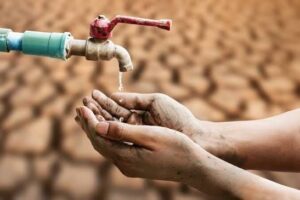
India is caught in a profound population-resource paradox. The nation supports roughly 18% of the world’s population but possesses a mere 4% of global freshwater resources. What was once feared as a distant environmental warning has manifested as an active economic, social, and structural emergency across both rural landscapes and major metropolitan hubs.
The country receives abundant annual precipitation; the true crisis is rooted in management, infrastructure, and rapid environmental degradation.
India remains the world’s largest consumer of groundwater, accounting for nearly one-fourth of global extraction. Driven by the massive cultivation of water-intensive crops like paddy and sugarcane in low-rainfall zones, aquifers are drying out significantly faster than they can naturally recharge.
Cities routinely face severe shortages due to plunging reservoir levels, leaving millions heavily dependent on private water tankers. Sudden disputes or strict regulatory crackdowns on ground extraction can paralyze entire residential societies overnight.
Across rural India, women spend an estimated 150 million hours every single day collecting water. In over 70% of households lacking a direct water connection, women carry this exhausting physical burden alone.
Young girls are routinely pulled out of school to assist in carrying heavy loads over miles of rough terrain, anchoring a vicious cycle of disrupted education and intergenerational poverty.
In the agriculture field moving away from traditional flood irrigation (flooding entire fields) toward drip and sprinkler systems delivers water directly to plant roots. This simple shift reduces agricultural water use by up to 60% while actually improving crop yields.
Rainwater harvesting should be practiced in every house .
In schools students should be taught ways to save water and make them into practice and ask them to share this with all their family members because the first step must be taken from our own house .
Cities must stop managing water as an endless commodity and start managing it as a circular, finite resource.