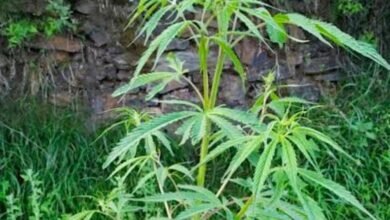
Biodiversity Day Special The Future of India’s Forests: Restoration, Resilience and Biodiversity

 Prof. Tapan Kumar Shandilya
For millennia, India has lived in quiet conversation with its forests. The neem outside the village temple, the peepal under which the philosopher sat, the sal grove that gave the tribal community its name – these were never just trees. They were ancestors, healers, and gods. Today, that conversation has become a whisper. Our forests, among the most biodiverse on earth, are under siege from fires, invasive weeds, fragmented corridors, and a changing climate. But a new understanding is emerging – one that does not see every forest fire as a disaster or every fallen tree as a defeat. It is called disturbance ecology, and it teaches us that nature often renews itself through upheaval. The question is not how to stop all disturbance, but how to restore the forest’s own power to rise again. Mahatma Gandhi once said, “Earth provides enough to satisfy every man’s needs, but not every man’s greed.” Safeguarding Indian forest biodiversity requires us to embrace both the wisdom of ancient sages and the humility of modern science.
Imagine a lightning strike in a dense forest. A giant tree crashes down. For a moment, there is shock. Then the forest breathes. Sunlight reaches the ground for the first time in centuries. Seeds that lay dormant spring to life. Insects swarm the fallen wood. Birds follow. What looked like destruction is actually creation. This is disturbance ecology – the study of how natural events like storms, fires, and pest outbreaks actually maintain the health of a forest. India’s forests have evolved with such rhythms. The dry teak forests of Madhya Pradesh learned to tolerate seasonal ground fires. The mangroves of the Sundarbans learned to recover from cyclones. The Himalayan oaks learned to resprout after landslides. Rabindranath Tagore said, “The forest is not a resource for human beings, it is life itself.” Without occasional disturbance, forests become stagnant, overcrowded, and vulnerable to catastrophic collapse.
Yet the disturbances we face today are different. They come too often, too fast, and too fiercely. Climate change has turned regular dry seasons into firestorms. Human activity has cut roads through wildlife corridors, turning one vast forest into a hundred isolated fragments. Invasive plants like Lantana, which arrived as ornamental shrubs, now blanket millions of hectares, smothering native grasses and tree saplings. When a natural disturbance hits such a weakened forest, the damage is no longer regenerative – it is fatal. A famous Indian proverb reminds us, “When you wound the forest, you wound yourself.” So the first step in safeguarding biodiversity is to recognise which disturbances belong to nature and which are the wounds we have inflicted ourselves
India is one of the world’s 17 megadiverse countries. We have over 45,000 plant species and 90,000 animal species. Many of them are found nowhere else – from the liontailed macaque of the Western Ghats to the Namdapha flying squirrel of the Northeast. This richness is not a luxury; it is the foundation of our survival. Forests provide clean air, pure water, soil fertility, and pollination for our crops. They absorb carbon dioxide and release oxygen. They cool our cities and feed our monsoons. As the environmentalist Vandana Shiva has often said, “Biodiversity is our bank account for the future. We cannot withdraw more than we deposit.” When a forest is disturbed beyond its ability to recover, these services collapse. A fragment of forest cannot support a tiger, because a tiger needs a territory of hundreds of square kilometres. A degraded hillside cannot hold rainwater, so wells dry up and floods worsen. A forest invaded by weeds cannot produce medicinal herbs or edible tubers for forestdependent communities. Over 200 million Indians live near or inside forests, relying on them for fuel, fodder, and food. When biodiversity declines, poverty climbs. Jawaharlal Nehru once observed, “We must plant trees and protect our forests, for they are the lungs of our planet.” Without healthy forests, no amount of technology can replace the free services that a healthy ecosystem provides.
Palamu News: आधुनिक भारत के निर्माता थे राजीव गांधी : हृदयानंद मिश्र
For decades, India’s approach to forest loss was simple – plant more trees. Millions of saplings were raised in nurseries and planted in barren lands. Eucalyptus, casuarina, and teak became favourites because they grew fast and straight. But a plantation of a single species is not a forest. It does not feed a hornbill, shelter a gecko, or nurture an orchid. It is a tree farm, a green desert. True restoration is different. It begins with listening to what the land needs. The famous naturalist John Muir said, “When we try to pick out anything by itself, we find it hitched to everything else in the universe.” Sustainable restoration follows several principles that are as old as India’s sacred groves. First, protect the remnants. Any patch of oldgrowth forest – however small – is a library of biodiversity. It contains seeds, fungi, and soil microbes that cannot be bought in any market. Second, allow natural regeneration. India’s forests have an astonishing capacity to recover if we simply stop cutting and grazing them. The Chipko movement taught us that when villagers hug trees, they are not being sentimental – they are being practical. As Sunderlal Bahuguna, the leader of Chipko, famously declared, “Ecology is permanent economy.”
मोदीशाही : नाकामियों के लिए अब युद्घ की ओट
Third, restore at landscape scale, not patch by patch. A single restored grove surrounded by degraded land will fail because birds and mammals need corridors to move, feed, and breed. Fourth – and this is where disturbance ecology becomes essential – we must work with disturbance, not against it. In many dry forests, small, controlled fires (set by local communities as they have done for generations) reduce fuel load, prevent catastrophic wildfires, and encourage the growth of fireadapted grasses. Similarly, allowing a certain amount of fallen timber to remain on the forest floor provides habitat for beetles, fungi, and small mammals. Aldo Leopold, the father of wildlife ecology, wrote, “A thing is right when it tends to preserve the integrity, stability, and beauty of the biotic community. It is wrong when it tends otherwise.” A clean forest is not necessarily a healthy forest; a messy forest is often a living forest.
No restoration effort can succeed without the people who live at the forest’s edge. India’s Forest Rights Act, passed in 2006, recognised that tribal and other traditional forest dwellers have a legal claim to the forests they have protected for centuries. Joint Forest Management committees have shown that when villagers share the benefits of forest produce – from tendu leaves to mahua flowers – they become fierce protectors. The ancient Vedic saying Vasudhaiva Kutumbakam (the world is one family) extends beyond human beings. The forest is also a family member: the bamboo that gives shelter, the neem that gives medicine, the banyan that gives shade. But this partnership requires justice. Too often, forest departments have treated local communities as trespassers and poachers. The result is resentment, and then encroachment, illegal logging, and even arson. Sustainable restoration means investing in alternative livelihoods – a small biogas plant so a woman does not have to cut firewood, a nontimber forest product cooperative so a tribal youth does not have to sell his land to a contractor. It means ecotourism that shares ticket revenue with village councils. As the Dalai Lama said, “We have a responsibility to look after our planet. It is our only home.” A hungry stomach has no ears for ecology; a full stomach becomes the forest’s strongest ally.
The window for action is closing. Climate models predict that much of India will experience more frequent droughts, more intense cyclones, and higher temperatures by the middle of this century. Our forests will face stresses they have never faced before. Waiting for perfect conditions is not an option. As the Chinese philosopher Lao Tzu said, “A journey of a thousand miles begins with a single step.” So we need fundamental shifts in policy and practice. First, move from counting trees to measuring biodiversity. For decades, success has been reported as number of saplings planted. But a sapling that dies after two years, or an exotic species that outcompetes native plants, is no success. We need new metrics: the return of native bird species, the regeneration of indigenous grasses, the health of forest streams. Only then will we know if restoration is working. Second, integrate disturbance ecology into every forest management plan. Accept that fire, wind, and pests are not always enemies. Train forest staff in controlled burning. Leave dead wood where it falls. Allow rivers to meander naturally instead of lining them with concrete. Third, create a national network of reference forests – minimally disturbed oldgrowth patches that serve as models for restoration. If we do not know what a healthy forest looks like in each biogeographic zone of India, we will be restoring blindly. As the ecologist E.O. Wilson wrote, “The diversity of life is our most valuable and least appreciated resource.”
You do not need to be a forest officer or an ecologist to help. Every citizen can contribute. Plant native trees in your neighbourhood – not gulmohar or jacaranda from other continents, but neem, jamun, peepal, and banyan. Buy products that carry certifications for sustainable forestry. Reduce your use of paper and wood. Support organisations that work on forest restoration. When you visit a national park, pay the entry fee and speak up for its protection. And perhaps most importantly, remember that climate change is the biggest disturbance of all – every time you save electricity, take public transport, or avoid plastic, you reduce pressure on forests. The poet Robert Frost once said, “The woods are lovely, dark and deep, but I have promises to keep.” Our promise is to the generations that will inherit this land. The forest begins in your mind long before it appears on a mountain.
India’s forests have survived ice ages, volcanic eruptions, and centuries of human use. They have a resilience that humbles us. But that resilience has limits. The disturbances of the twentyfirst century – driven by greed, ignorance, and a warming planet – are testing those limits as never before. The good news is that we already know what to do. Protect the remnants. Restore connections. Work with nature’s cycles. Empower local communities. Measure what matters. As the great conservationist John Muir also said, “When one tugs at a single thing in nature, he finds it attached to the rest of the world.” When we restore a forest, we do not plant just trees – we plant rain, we plant oxygen, we plant hope. The famous slogan Satyameva Jayate (Truth alone triumphs) must now be extended to Haritameva Jayate (Green alone triumphs). Because the truth of our survival is written not in GDP tables or election manifestos, but in the rings of a tree, the wingbeat of a hornbill, and the quiet resilience of a forest that forgives us every time we learn to do better. Rabindranath Tagore also wrote, “The same stream of life that runs through my veins runs through the world.” Let that be our restoration. Let that be our promise. And let us remember the words of an old Chinese proverb: “The best time to plant a tree was twenty years ago. The second best time is now.” For India’s forests, for our children’s air, and for the biodiversity that makes our planet a living home – now is the only time that matters.
(Prof. Tapan Kumar Shandilya
Former Vice-Chancellor, D. S. P. M. University, Ranchi, Jharkhand.)